
The Dreamer and the Imaginary Self
The ImaginaryThis flow traces how the dreamer can become emotionally involved in a dream by identifying with an imaginary figure rather than entering the dream as a real person.
increasing Bearing strength in each event
 decreasing
Bearing strength in each eventdecreasingA Scene Without the Dreamer
The Story Begins Elsewhere
An impersonal scene
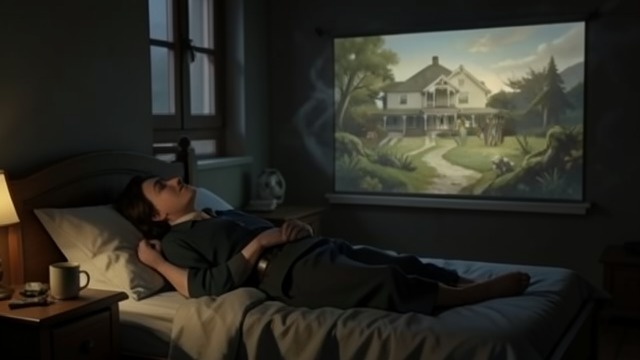
Sartre describes dreams that begin as though their events belong to characters other than the dreamer. A dream can initially be experienced as a story being watched rather than as the dreamer’s own adventure.
This distinction prevents the theory from treating the real sleeper as an ordinary actor inside an imagined world.
A possible transition
The dream’s focus may shift as the sleeper becomes identified with one of its figures. The change concerns the dream’s imaginative organization, not the arrival of a real person within it.
The Figure Becomes Me

Identification in the Dream
An imagined identity
A dream character may suddenly be taken as the dreamer. The figure remains an irreal object, but it now carries an affective quality of being-me within the dream’s story.
Sartre calls attention to this imagined self to explain how the sleeper can feel involved without literally becoming part of a real world.
A changed emotional relation
The dream’s danger or promise now appears to concern the dreamer through that figure. Emotional participation deepens even though the scene remains imaginative.
The Dream Encloses Its Self

A World Lived as Fiction
The adventure surrounds the figure
Once the dreamer identifies with the imagined self, the surrounding dream can feel like a world suffered from within. Yet this is not a real consciousness inserted into an imaginary setting; the self within the scene is itself imagined.
The sleeper remains the consciousness producing and sustaining the dream.
Fascination and awakening
The bond can be powerful because the dreamer is fascinated by the story and cannot easily stand outside it. Awakening restores the distinction between the real sleeper and the imagined adventure.
Early in Part IV, Chapter 4
As the dream develops into personal adventure
Near the end of Sartre’s dream analysis
